Te Poutama o te Ora

Articles on Te Poutama o te Ora, a nine-dimensional Māori wellness framework, including the Maramataka, whakapapa, colonisation and healing.

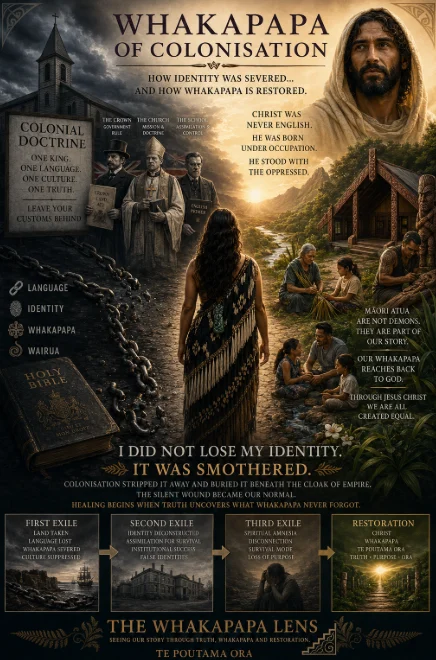
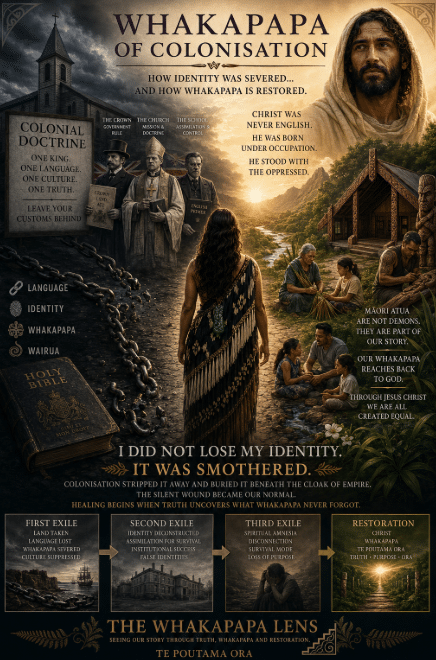
Whakapapa of Colonisation: Te Poutama o te Ora illustration
Guidance Counselling, Te Poutama o te Ora

When the Bindings Break – The whakapapa-pond, and why three traditions all knew the same thing

I’ve seen a pattern across years of research and development that I didn’t have a name for at first.

Someone comes in carrying something heavy. We do the work—we name what happened, trace where it came from, and build insight and understanding. There is movement. Something shifts; then, six weeks later, they are back carrying the same thing. Different circumstances, same weight. The pattern has reasserted itself as though the work hadn’t happened.

For a long time, I thought this was about depth — that we hadn’t gone far enough back, hadn’t found the right entry point, or done enough of the right kind of processing. But that wasn’t it. The issue wasn’t depth of insight. Something was still holding the pattern in place underneath the level where psychological intervention reaches.

I now have a name for what that something is, and I have three very old traditions that all independently agreed on what to do about it.

Whakapapa of Colonisation: Te Poutama o te Ora illustration
Guidance Counselling, Te Poutama o te Ora

What Your Descendants Will Thank You For – The moment the healing becomes ancestral — and what you declare forward from here

The gifts my grandparents gave me.

Grandad, an Anglican minister and healer, was strong in his faith. He passed before I was born; however, as a child, I remember stories about his importance to the community. God became the redemption story for that ministry. Nan was also impacted by the Tohunga Suppression Act that made her healing gifts illegal; it forced her to practice underground.

The lineage that should have transmitted those gifts—the instruction, the context, the container—was severed by a legislative act before they could be passed on to their mokopuna. Despite this, Christianity found its way through, with Grandad as the foundation of the promise to God. I remember Mum saying his wish was that all his children would follow God.

The gifts came…Not through the proper channel. Through the cracks. A continued legacy of Christian faith that continues in my children. Creativity that arrived to me as downloads without a home. Capacities I could not name. A quality of perception I had no framework for. A certainty, sometimes, about what a person needed that felt like it came from somewhere other than my own training.

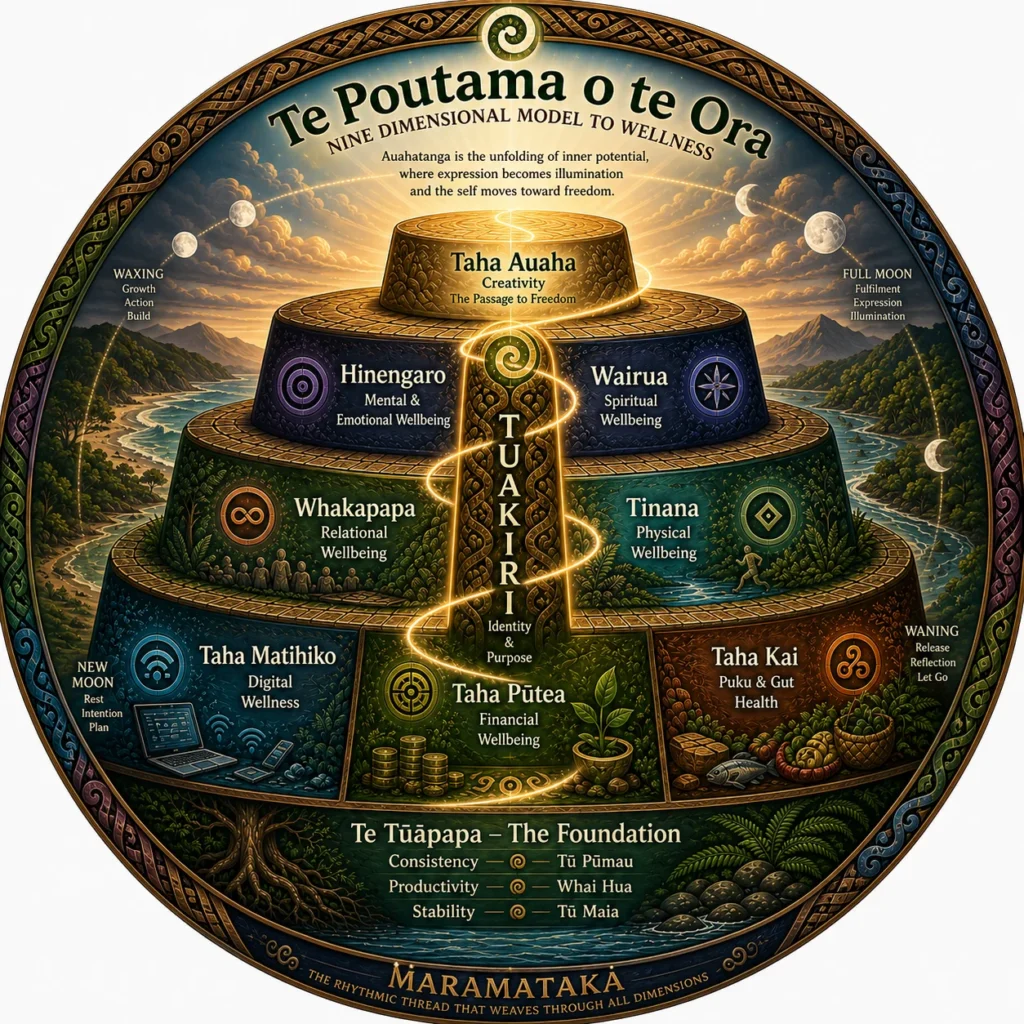
Te Poutama Ora is the container – Te Taha Auaha – built for those gifts. This series has been building toward that. That is Te Tuku — the forward declaration.
Whakapapa of Colonisation: Te Poutama o te Ora illustration
Guidance Counselling, Te Poutama o te Ora

From Wai Māori to Waipiro: The Colonial Wound Beneath the Wine Glass

There is a man in the counselling room who does not have a drinking problem.

He is not violent. He does not drink to excess. He has not passed his father’s or grandfather’s patterns down to his children. By every visible measure, the wound has stopped. And yet — every evening, almost without thinking, he reaches for the wine glass. He cannot fully explain it. He just does.

This article is about that thread.

Not the dysfunction — which may already be healed across generations — but the residue. The quiet filament that remains when the storm has passed. And beneath that residue, a wound most of us have never been given the language to name: the colonial displacement of wai Māori.

Whakapapa of Colonisation: Te Poutama o te Ora illustration
Guidance Counselling, Te Poutama o te Ora

The Wound That Became the Work

What happens when you stop surviving your wound and start metabolising it

There is a difference between surviving a wound and metabolising it.

Surviving means the wound is still whole inside you — managed, adapted to, worked around — but fundamentally intact. Metabolising means the wound has been broken down into its components. What was useful has been kept and used for something new, and what has been released. The wound no longer exists as it was. Something else exists in its place.

This article is about that third phase. I want to begin it with a word that most healing frameworks don’t use enough: fasting.

The ‘Fasting’ comes first

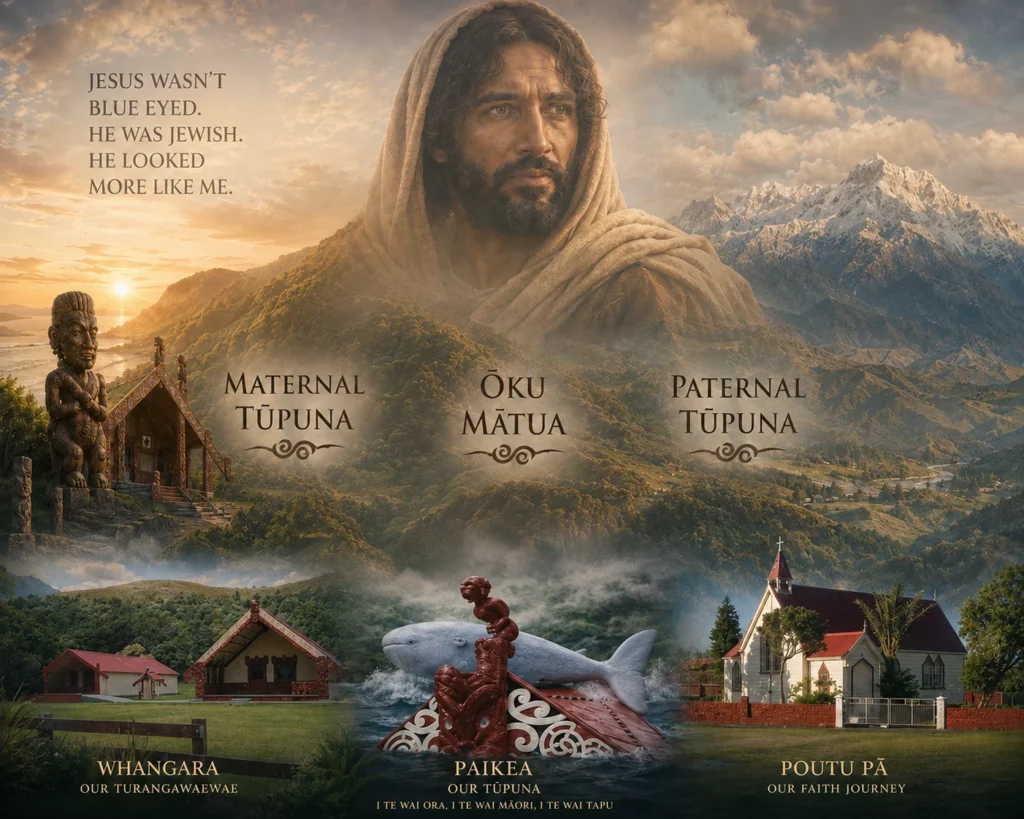
Illustration of Jesus above maternal and paternal tūpuna, Imago Dei
Guidance Counselling, Te Poutama o te Ora

Me and the Cave

How five years in the dark became Te Poutama Ora – and Imago Dei brought me front and centre

You may already be familiar with my life origins; thirty-five years in a corporate environment enabled me to build a lifestyle, from all intents and purposes…was successful. Then a life-changing event that turned that vision completely upside down. That was in 2020.

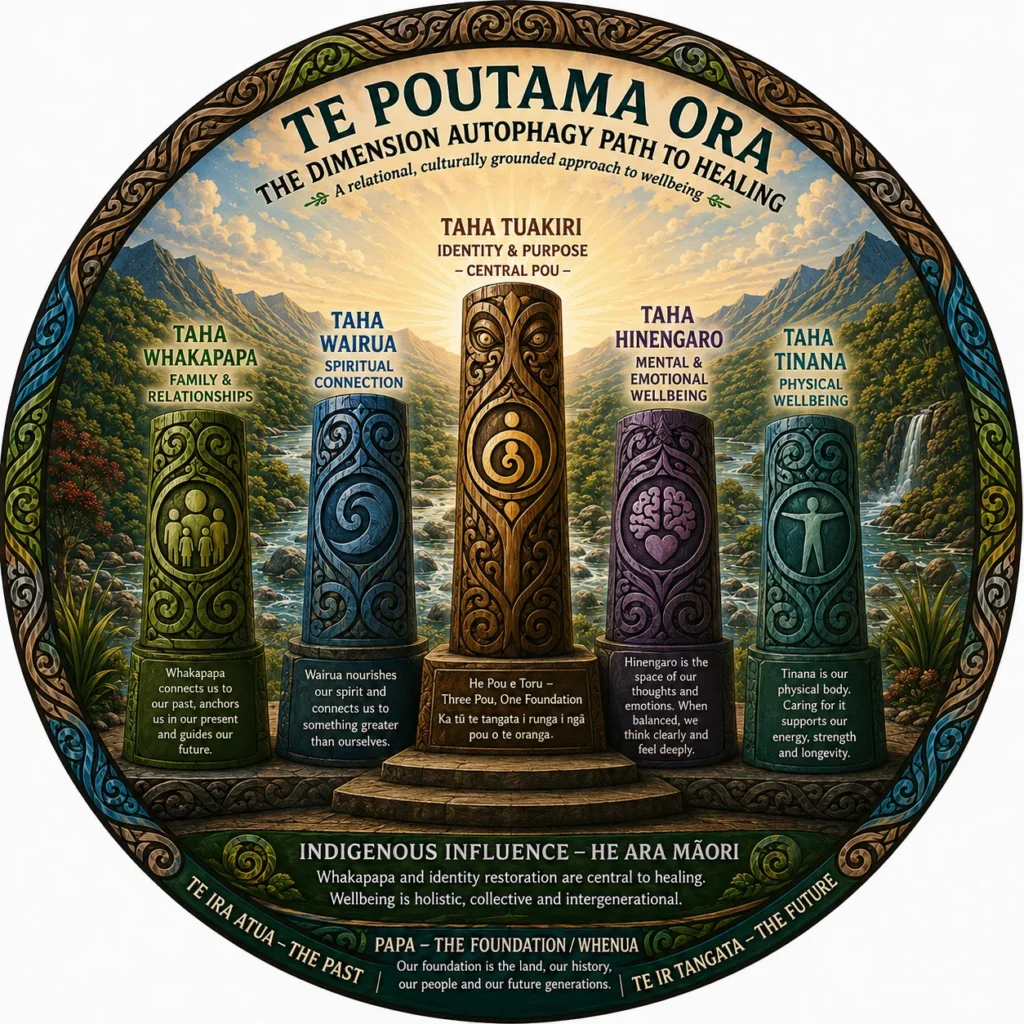
Te Poutama o te Ora: dimension autophagy, the path to healing
Guidance Counselling, Te Poutama o te Ora

Te Ngākau Tūāhua – The Normalised Heart

When the wound became the water.

There is a kind of harm that is very difficult to see.

Not because it is hidden. But because it has been present so long, and so completely, that it stopped looking like harm at all. It became ordinary. It became the way things are, and for many of us, what we thought of as simply ourselves.

This is what is meant by normative abuse.

It is, I want to argue, one of the most precise ways to describe what colonisation did — and continues to do — to Māori and to those who carry its inheritance, whether they know it or not.

Whakapapa of Colonisation: Te Poutama o te Ora illustration
Guidance Counselling, Te Poutama o te Ora

Te Māra me te Pīkao – The Garden and the Ivy

Three sentences. Three exiles. And why “just get over it” is not a garden — it’s a weed strategy.

Poison ivy doesn’t announce itself.

It sits quietly along the fence line, climbs where no one is looking, and waits for the right conditions. Then it releases. The strangulation isn’t sudden — it was always there. What changes is that the conditions are finally right for it to show what it’s been doing the whole time.

Colonisation operates the same way. Most of the time it doesn’t look like colonisation. It looks like ordinary sentences — said by whānau, by colleagues, by people who mean well, sometimes by the voice in your own head.

Whakapapa of Colonisation: Te Poutama o te Ora illustration
Identity, Te Poutama o te Ora

The Poison Ivy You Didn’t Plant – Understanding Colonisation — why naming it changes everything

I chose the metaphor of Poison Ivy for a specific reason:

There is a plant called poison ivy. Once it gets into your system, the urushiol oil it carries can take up to three days to produce a reaction. By the time the itch arrives — the rash, the inflammation, the unbearable urge to scratch — you have no memory of the contact. You were not paying attention when it happened. You may not even have been near the plant. It spread to you on the hands of someone who did not know they were carrying it.

This is what colonisation has done to generations of Māori families in Aotearoa New Zealand.

Not only as a metaphor, but also as a clinical mechanism.

Scroll to Top