
Anxiety is a common human experience in Aotearoa New Zealand, and support is available. Counselling offers a private space to talk through worries and explore ways of coping, although what helps differs for each person.
What is anxiety, and when might it be worth seeking support?
Anxiety is the body’s way of responding to something it senses as a threat or a worry. A little of it is part of life. It can sharpen your attention before a job interview or a hard conversation.
It may be worth reaching out when worry stays with you for long stretches, feels hard to switch off, or starts to affect sleep, work, study, relationships or the things you usually enjoy. You do not need to wait until things feel unbearable. Many people book a session simply because they would like to understand what is going on.
Only a doctor or other qualified health professional can diagnose an anxiety disorder. A counsellor can listen, help you make sense of what you are experiencing, and talk with you about whether it would help to see your GP as well.
How common is anxiety in Aotearoa?
Anxiety is one of the more commonly reported mental health experiences in New Zealand. The Ministry of Health’s New Zealand Health Survey and the Health New Zealand | Te Whatu Ora website publish current figures, and those pages are the best place to find up-to-date numbers.
What matters more than any statistic is this: if you are struggling with worry or fear, you are far from alone. Many people carry it quietly, and many find that simply saying it aloud to someone trained to listen takes some of the weight off.
Anxiety can also look different across communities, ages and cultures. Pressures such as work, housing, money, family responsibilities and isolation can all play a part, and so can the experiences passed down through families and communities.
What can anxiety feel like?
People describe anxiety in many different ways. Some notice it mostly in the body, others in their thoughts, and others in what they find themselves avoiding. Common experiences people describe include:
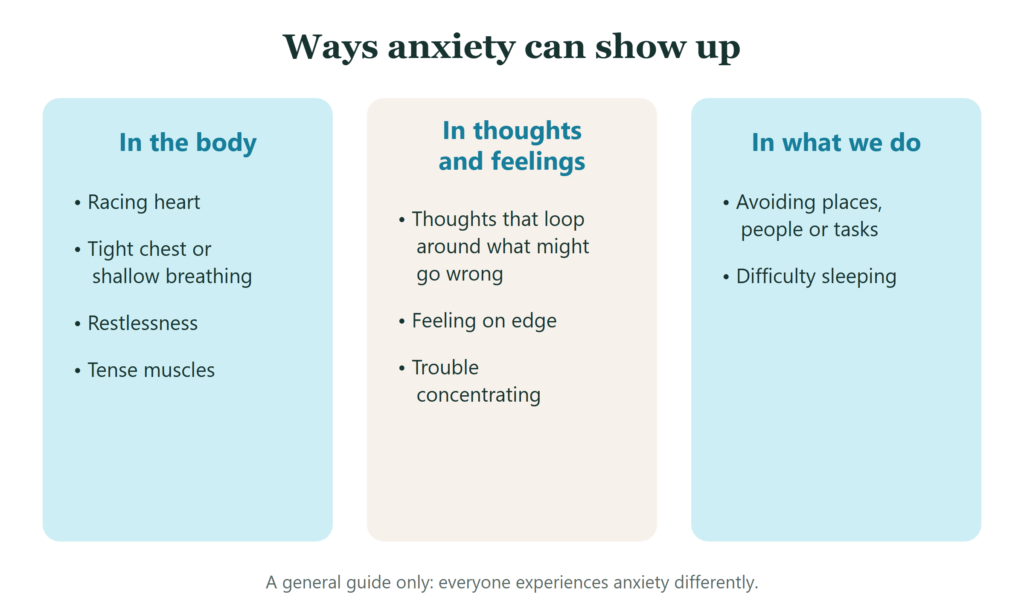
- A racing heart, tight chest or shallow breathing
- Restlessness, a knot in the stomach or tense muscles
- Thoughts that loop around what might go wrong
- Difficulty sleeping, or waking in the early hours with worry
- Feeling on edge, irritable or easily overwhelmed
- Avoiding places, people or tasks that bring on worry
- Trouble concentrating
How can counselling help with anxiety?
Counselling gives you regular, confidential time with someone whose role is to listen without judgement. For many people, that alone is a relief. Over time, a counsellor can help you notice patterns, understand what sets worry off, and explore ways of responding that feel workable for you.
Counselling cannot promise a particular result, and progress is rarely a straight line. Some people find a few sessions are enough to feel steadier. Others prefer to work over a longer period. You set the pace, and you can talk with your counsellor about what you hope for.
Some people also look at anxiety through a wider lens, including family history, identity and connection to culture. Counsellors New Zealand has written about this in The Whakapapa of Not Being Good Enough – The Weeds of Anxiety, which you may find a thoughtful companion read.
What kinds of counselling approaches are used for anxiety?
Counsellors draw on many approaches, and no single one suits everyone. Some focus on the links between thoughts, feelings and behaviour. Others pay attention to the body, to relationships, or to your story and where you come from. Some counsellors work in kaupapa Māori or culturally responsive ways, and some bring spiritual or whānau-centred perspectives.
It is fine to ask a counsellor how they work and whether it is likely to suit you. A good fit matters more than a particular label.
If you are unsure where to start, What type of therapy do I need? explains some of the differences in plain language.
Some things that help with anxiety
- Regular movement: walking, swimming, cycling or yoga can reduce tension.
- Gentle, slow breathing: breathe comfortably without forcing deep breaths; try counting slowly in and out for a few minutes.
- Talking with someone you trust: sharing what is happening can help you feel supported.
- Gradually approaching feared situations: small, manageable steps can reduce anxiety over time when the situation is safe. Confidence grows through small steps
- Consistent sleep and less caffeine: especially worth considering if coffee or energy drinks leave you jittery or disrupt sleep.
- Self-confidence and belief that you “know you can handle this”: This is often called self-efficacy: trusting your ability to cope, even when something feels difficult.
Can I get help with the cost? ACC and Work and Income pathways
Counsellors listed with Counsellors New Zealand are in private practice and charge for sessions. Fees vary between counsellors, so ask about the current rate before you begin.
ACC may cover the cost of counselling in some situations, for example where it relates to a sensitive claim. ACC decides whether a claim is accepted, not Counsellors New Zealand, and it usually involves a registered ACC provider. You can look for counsellors registered with ACC on the ACC Provider Map. The ACC website explains eligibility and how to lodge a claim.
Work and Income may offer financial assistance in some circumstances, and eligibility is decided by Work and Income. If money is a worry, you can contact them directly to ask what you may be able to access. A counsellor can also tell you how they handle payment, and you can read about fees and expectations in the Client Service Policy & Practice Agreement.
How do I find a counsellor who suits me?
Start with what matters most to you. You might want someone who works in a particular way, who understands your cultural background, or who is within easy reach of home or available online.
A few questions can help you decide:
- How do you usually work with anxiety?
- Do you work with ACC clients, if that is relevant to me?
- What are your fees, and how do cancellations work?
- Do you offer sessions in person, online or by phone?
What should I expect from a first counselling session?
A first session is mostly about getting to know each other. Your counsellor will usually explain how they work, how confidentiality works and its limits, and what you can expect from sessions. They will invite you to share what brought you in, but you decide how much to say.
You do not need to prepare anything; coming as you are can be a better way to connect with what you are feeling in the moment.
At the end, you can decide whether the counsellor feels like a good fit. If it does not, that is okay. You are free to try someone else.
Where can I get help right now?
If you are in distress and need to talk to someone now, call or text 1737 at any time. It is a national number and a trained counsellor will answer.
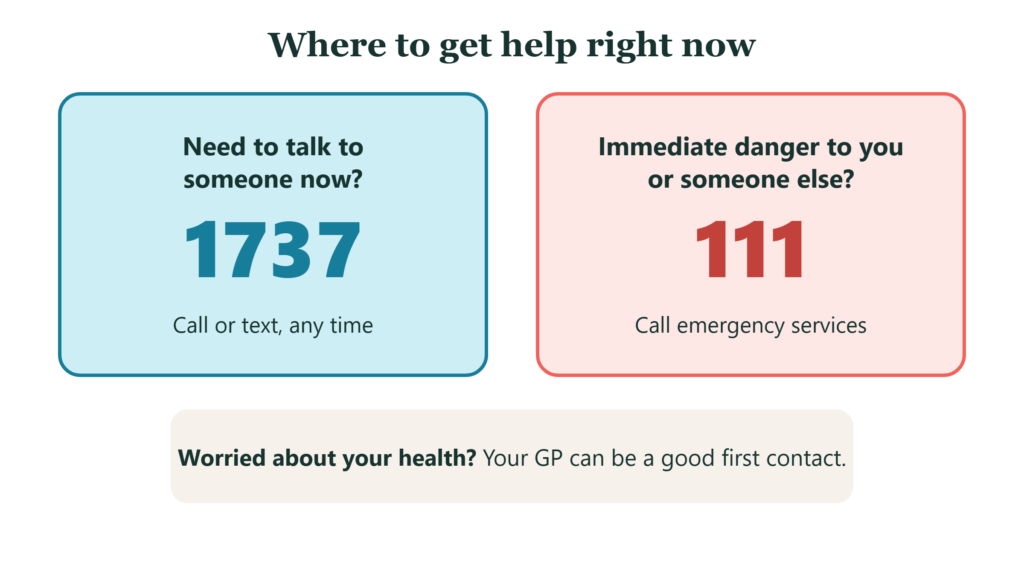
If you are worried about your health, your GP can also be a good first contact. Reaching out is a strong step, and you do not have to manage alone.
Common questions
Is counselling for anxiety worth trying?
Many people find it helpful to have a safe place to talk, though results differ between individuals. A first session lets you see how it feels with no obligation to continue.
Do I need a diagnosis before I see a counsellor?
No. You can see a counsellor simply because you are struggling with worry. Only a doctor or other qualified professional can diagnose, and a counsellor may suggest seeing your GP as well.
Does ACC cover counselling for anxiety?
Only in certain situations, such as some sensitive claims. ACC decides eligibility, so check with ACC directly. Counsellors New Zealand cannot decide this for you.
What number do I call if I need urgent support?
Call or text 1737 to talk with a trained counsellor at any time. In an emergency where someone is in immediate danger, call 111.